




Primary Research
Fragmented Process
Trust Deficit
No Actionable Feedback
A Fragmented & Inefficient Journey.
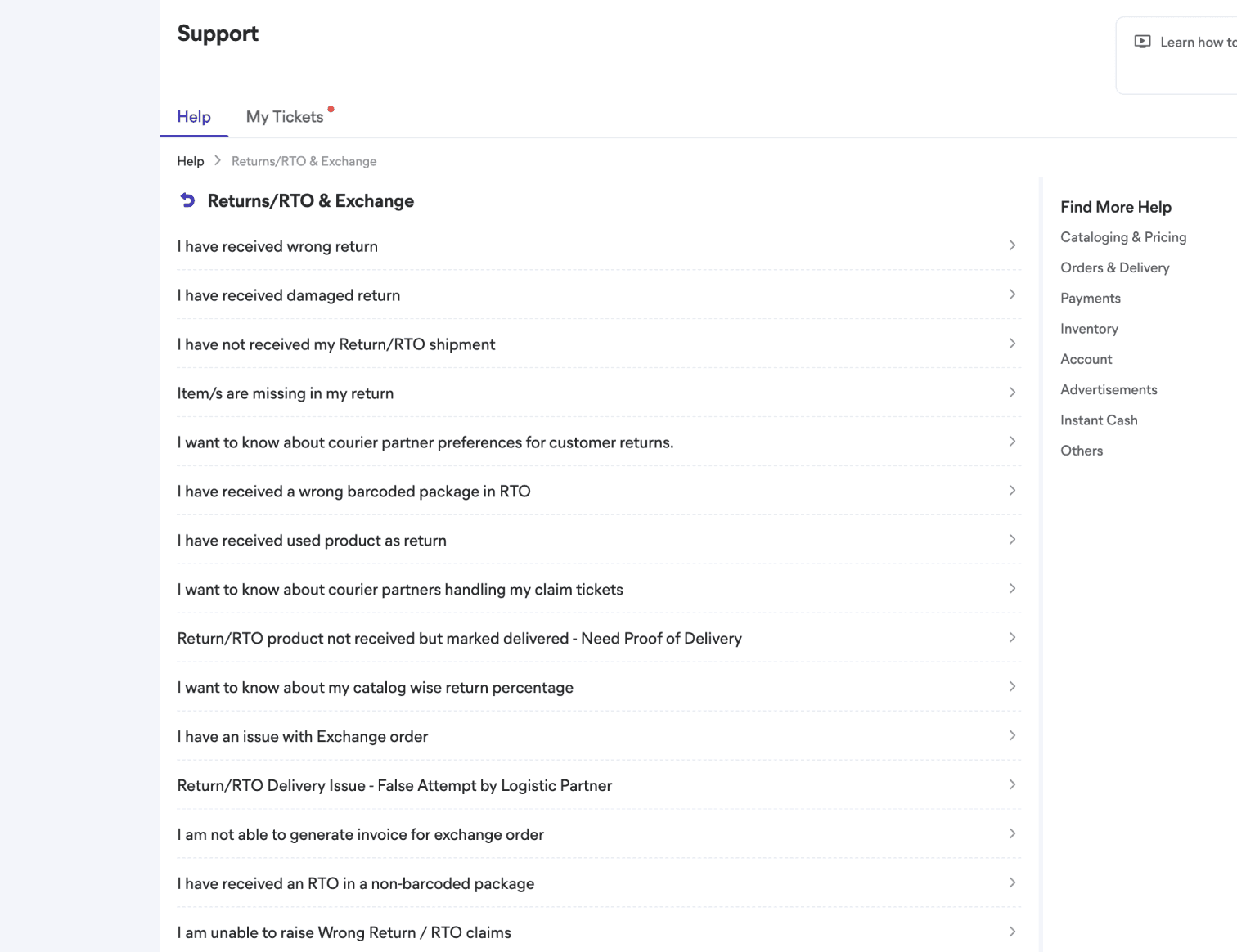
The existing process for raising and tracking claims was chaotic. Sellers were forced to navigate between two separate tabs-Support and Returns-to find and manage their claims. This wasn't just confusing; it was deeply inefficient.
The Problem
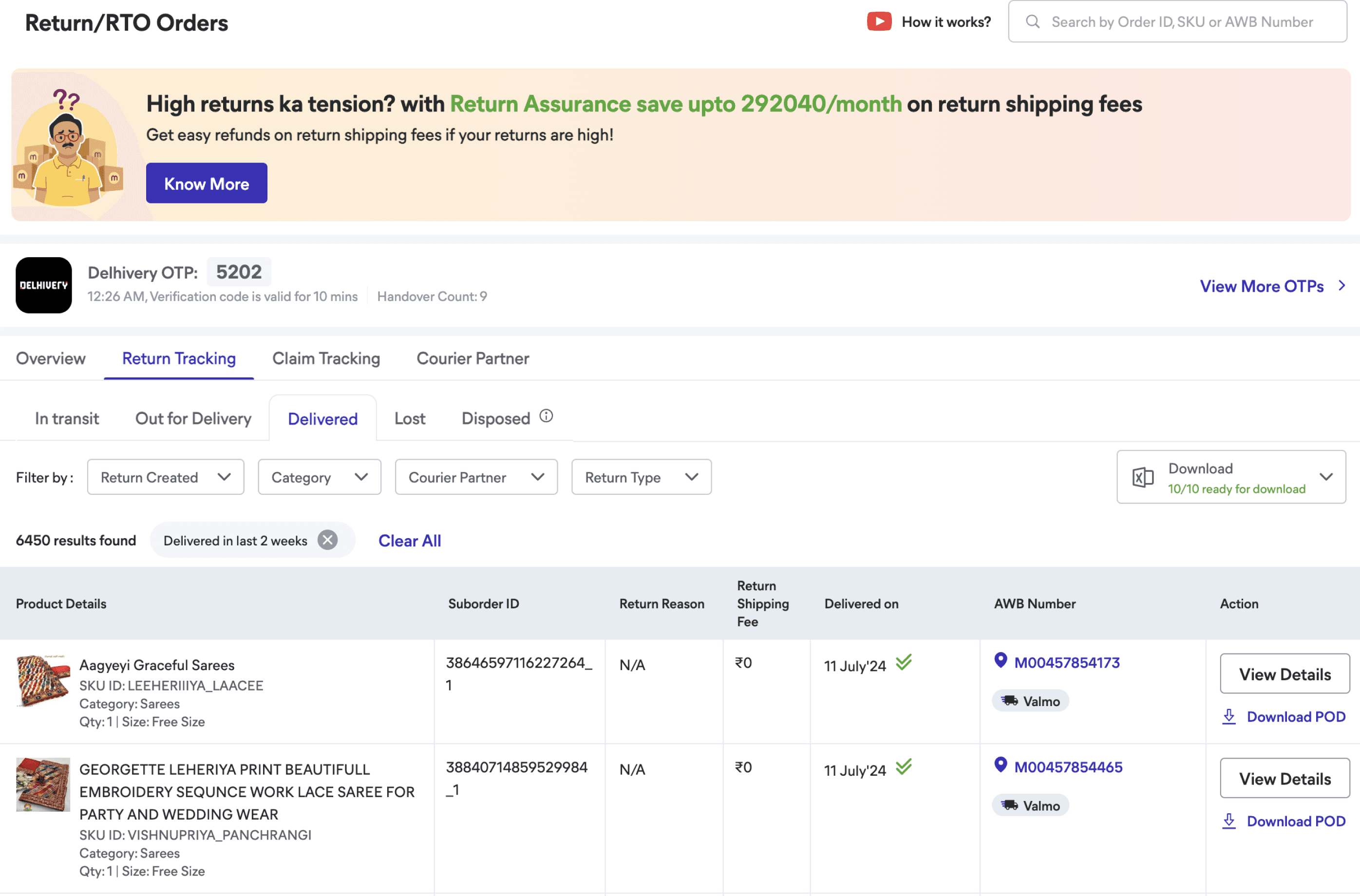
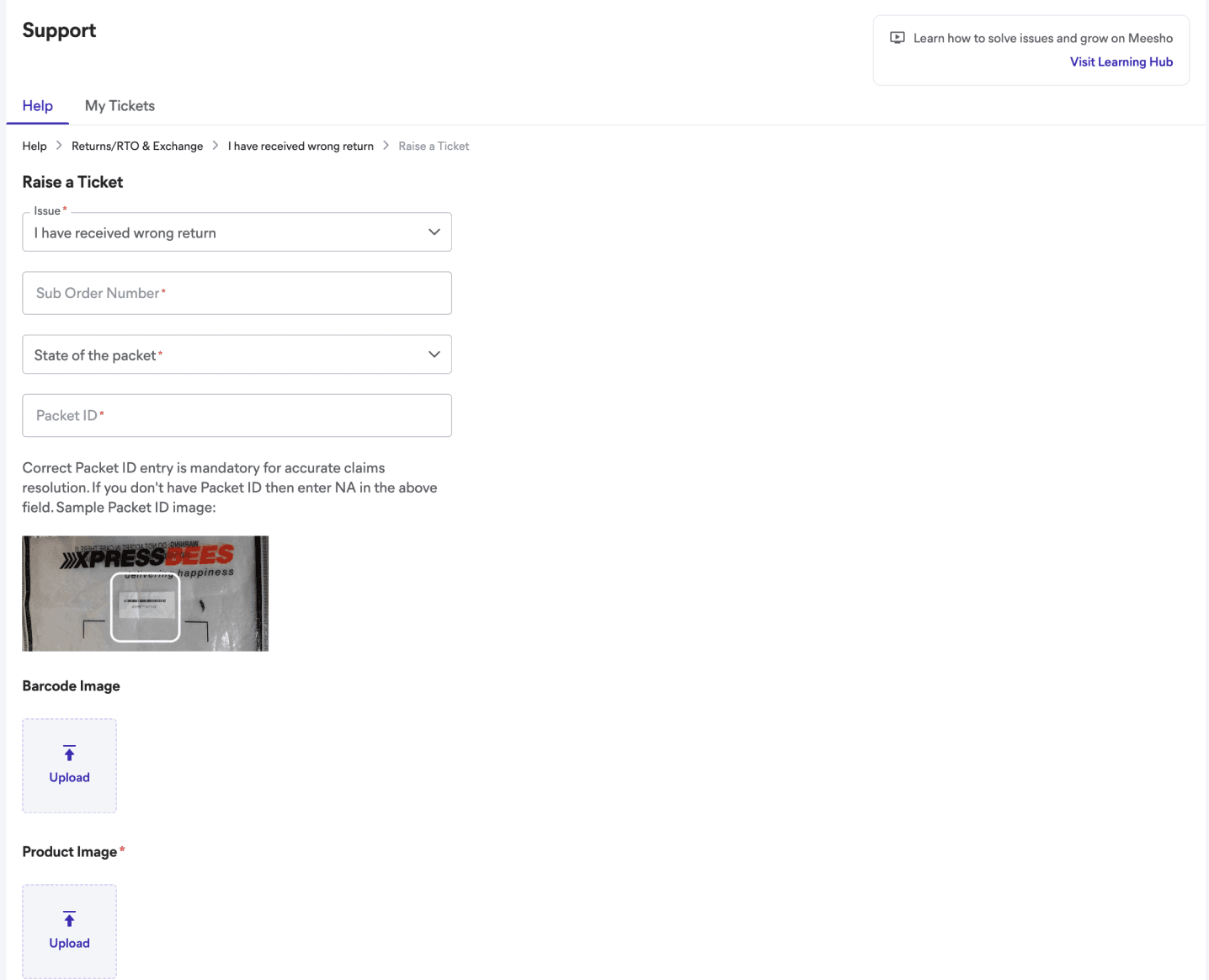
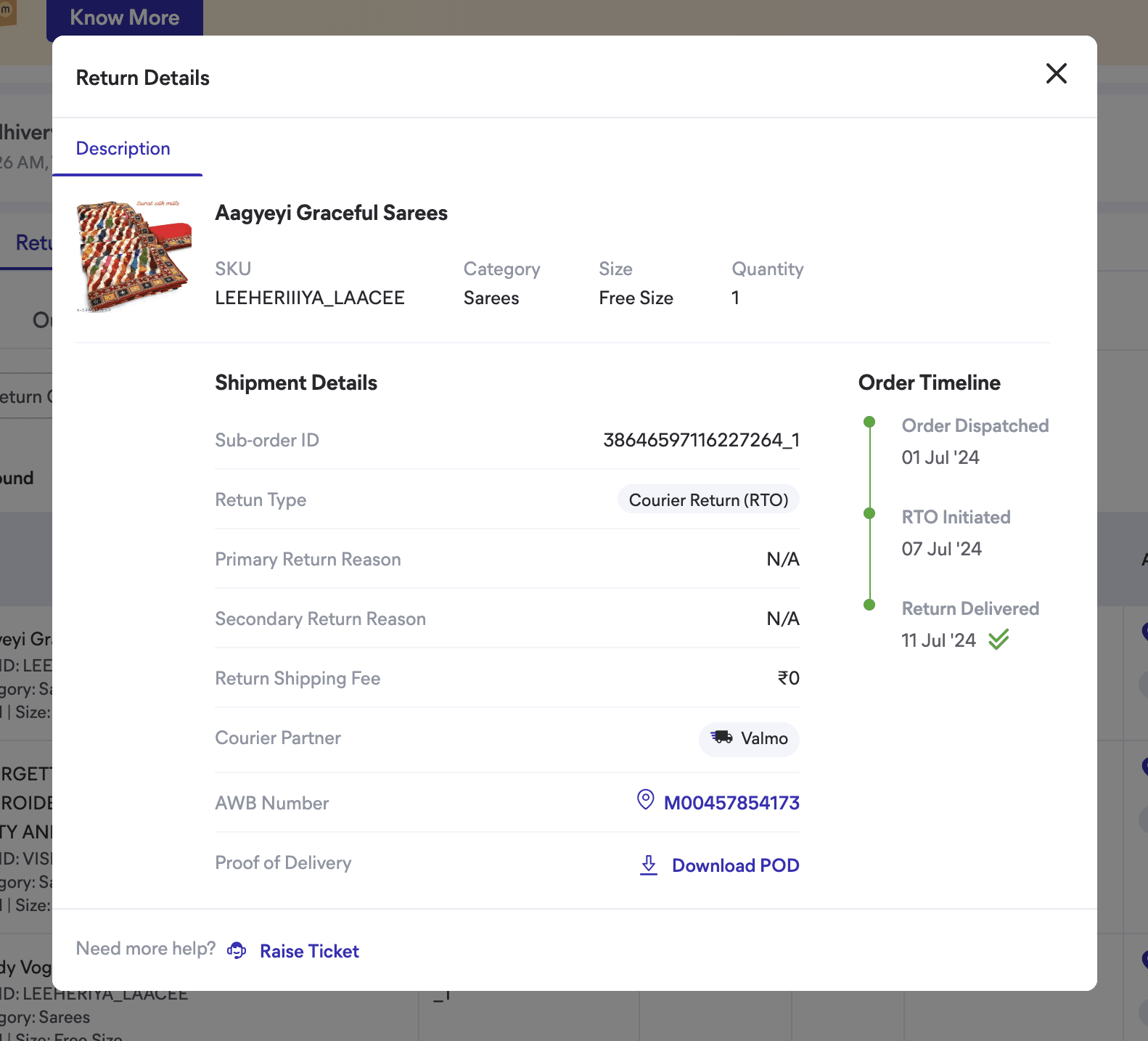
Raising a Claim: When sellers attempted to raise a claim, they faced two poor options. The first was to navigate the support tab, where they had to select from a long, confusing list of dispositions before filling out a lengthy form. Alternatively, they could try to raise a claim contextually from the returns tab, which was not easily discoverable. Worse yet, even when they used the contextual option, they were redirected to the same generic support form, forcing them to manually re-enter all the order information-rendering the contextual flow futile.
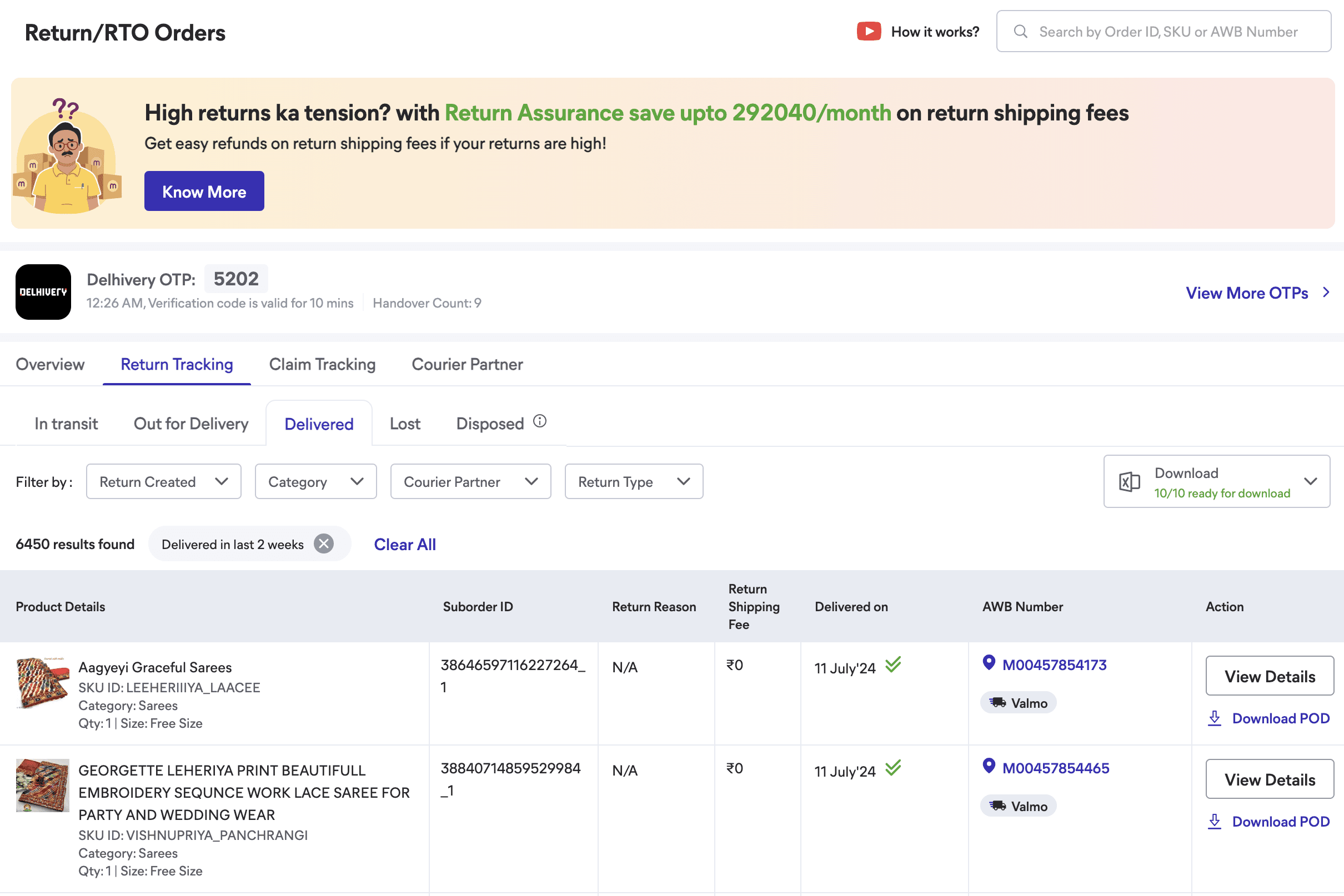
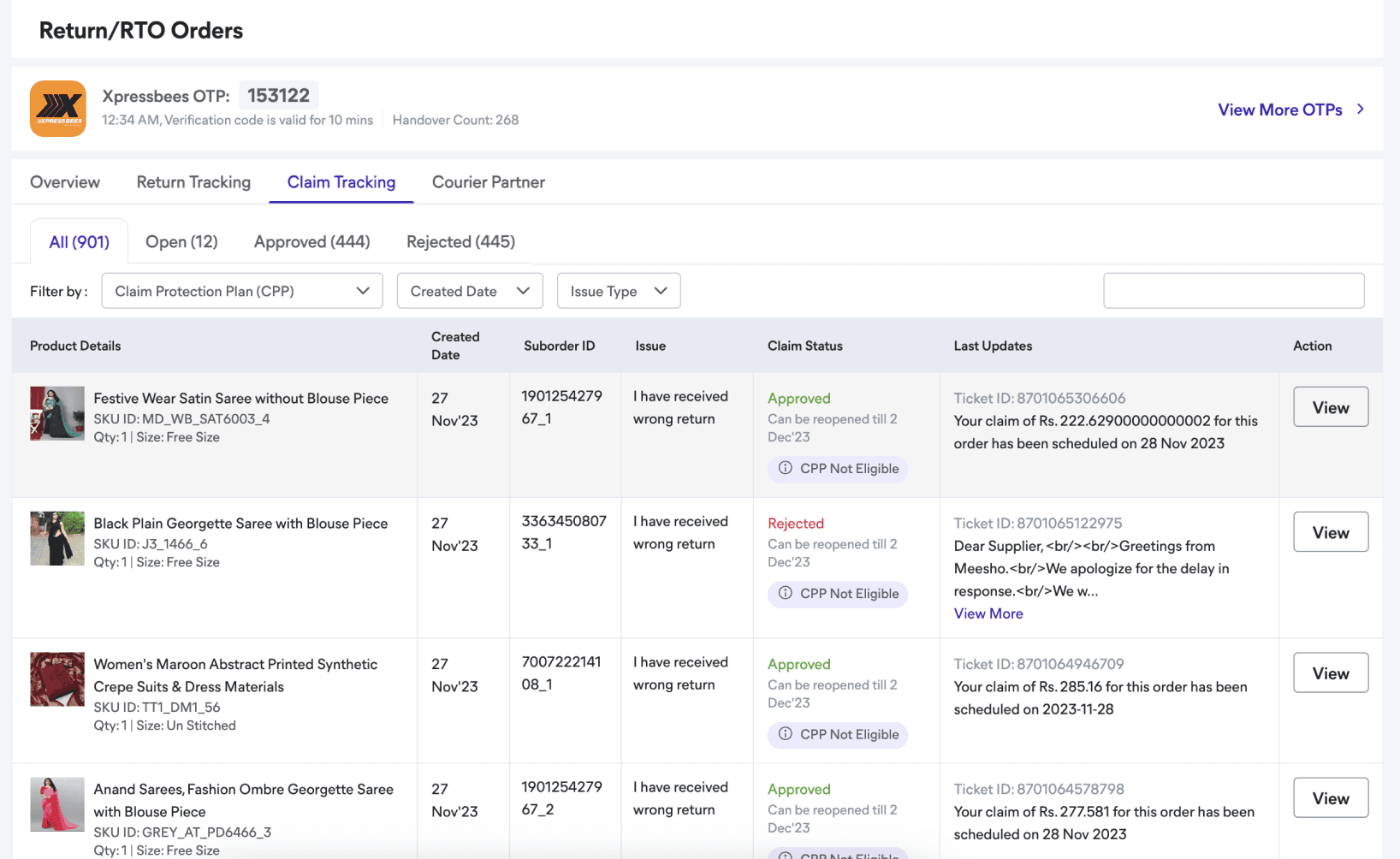
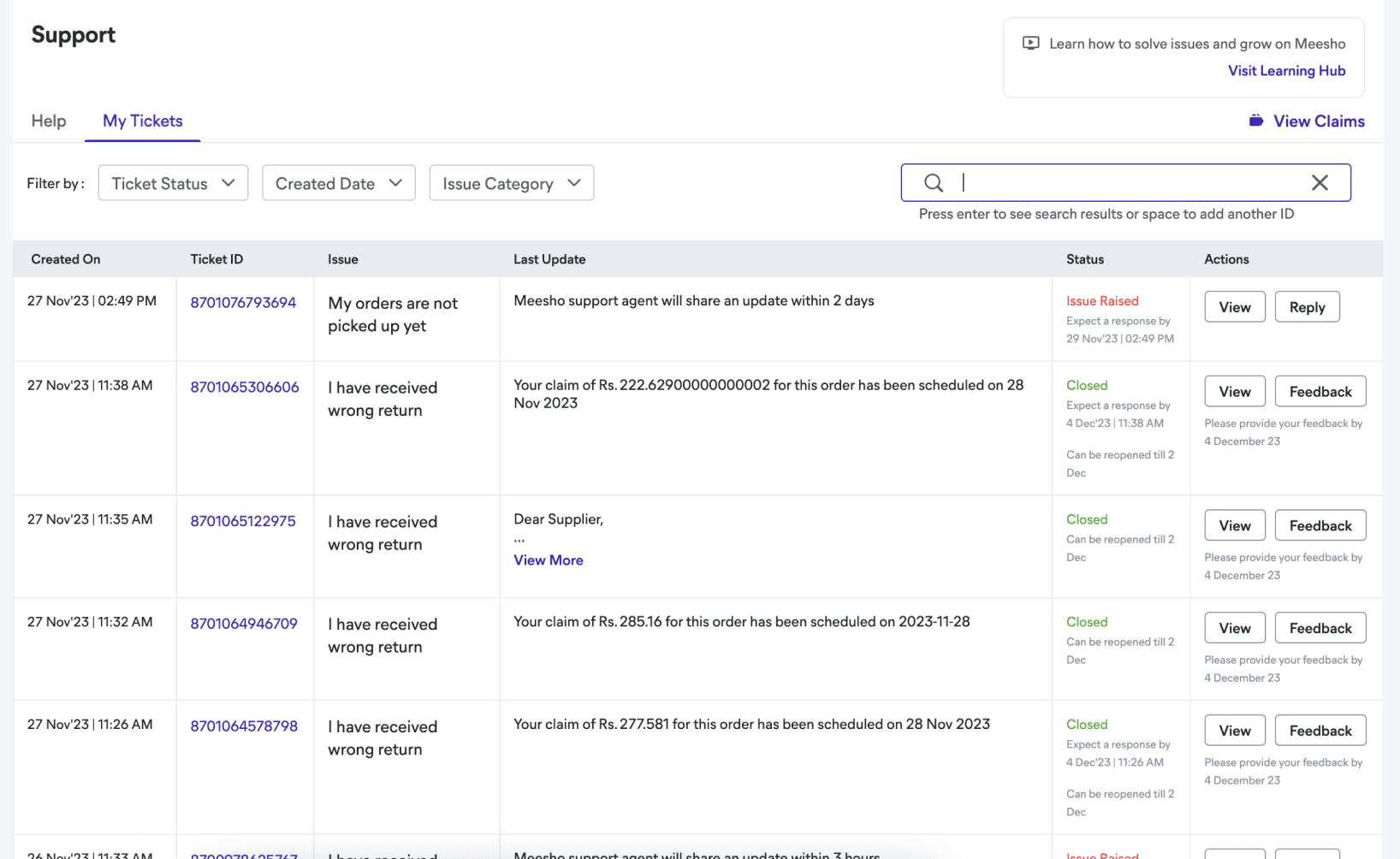
Tracking a Claim: This process was equally broken. While a "Claims Tracking" sub-tab in the returns dashboard provided helpful identifiers and statuses, clicking on a ticket would redirect the user to the support tab. This was the wrong user behavior, as tracking from the support tab was a chaotic experience-claims tickets were mixed with general support queries and lacked critical identifying information in the table, forcing sellers to open each one to see its status.
The Impact
This friction was so significant that sellers were abandoning the official panel and turning to third-party software like Wisdom and OMS Guru to streamline their workflow. This behavior highlighted a core failure in the user experience: it was simply easier to use an external tool than Meesho's own platform. The manual use of spreadsheets to track claims also proved that our current data was insufficient.


Problem
Contextual Claim Raise against returns not available upfront.
Problem
Contextual Claim Raise is at L2 level.
Problem
None of the data from return Table is retained.
The form filling process is tedious.
Returns Tab
Claim Raise Issues
Claim Tracking Issues
Returns Tab
Support Tab
Support Tab
Support Tab
Returns Tab
Problem
Huge list of dispositions, while only 8 of these are related to claims.
Sellers are unable to pick the right disposition most of the times.
Problem
The View CTA takes user back to Support Tab.
Problem
The identifier and Claim Status is missing.
The claim Tickets are mixed with other support tickets.
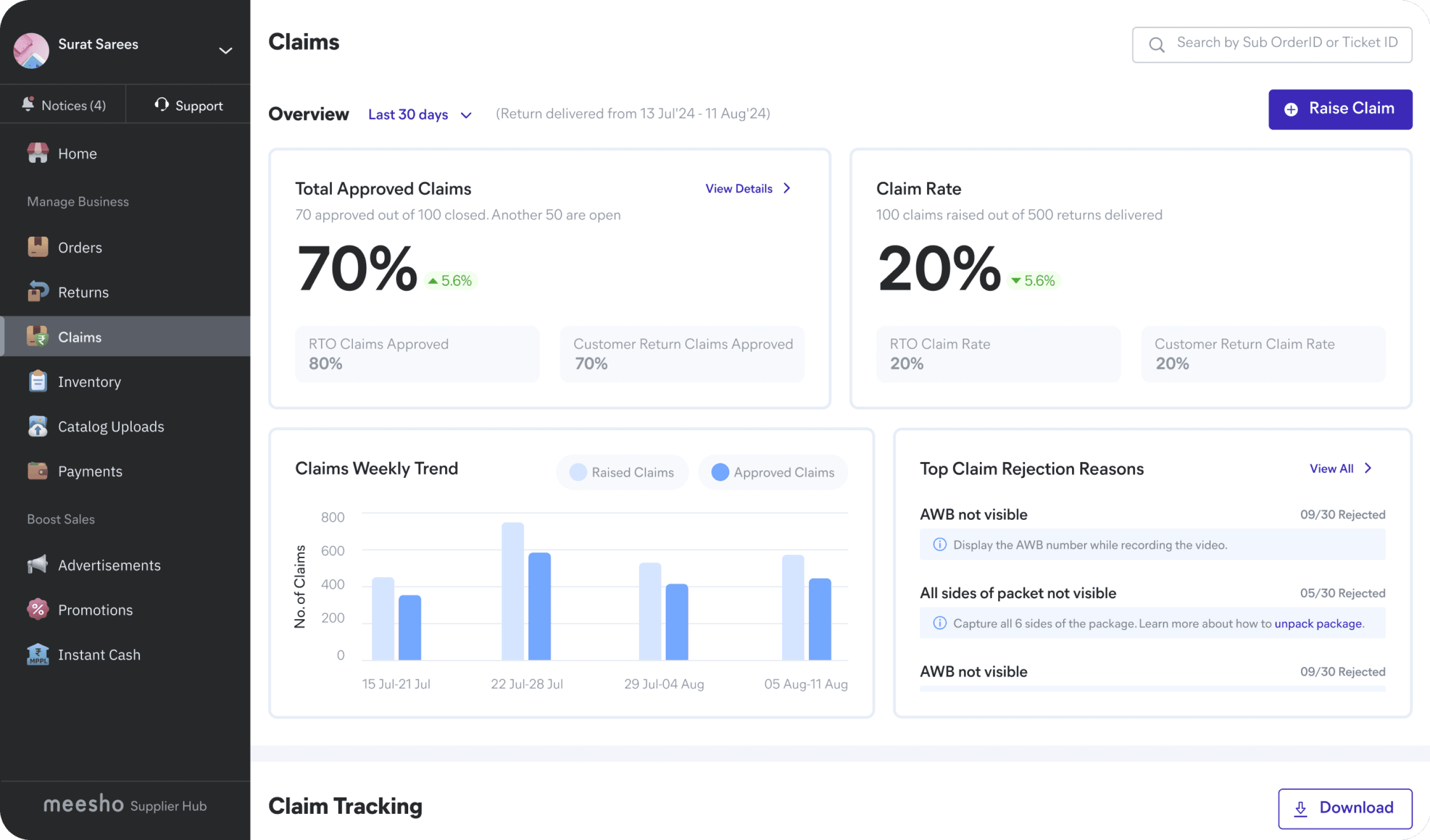
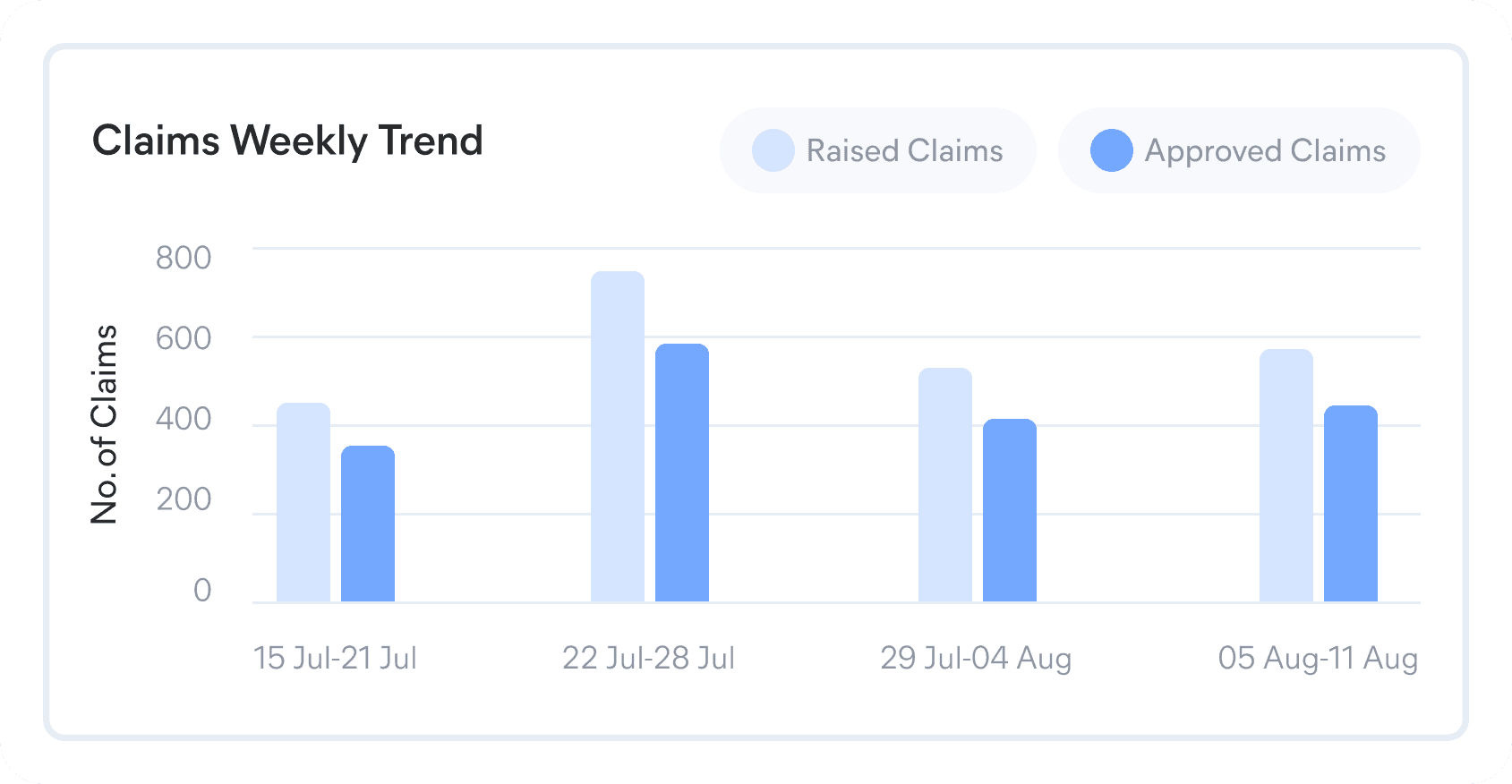
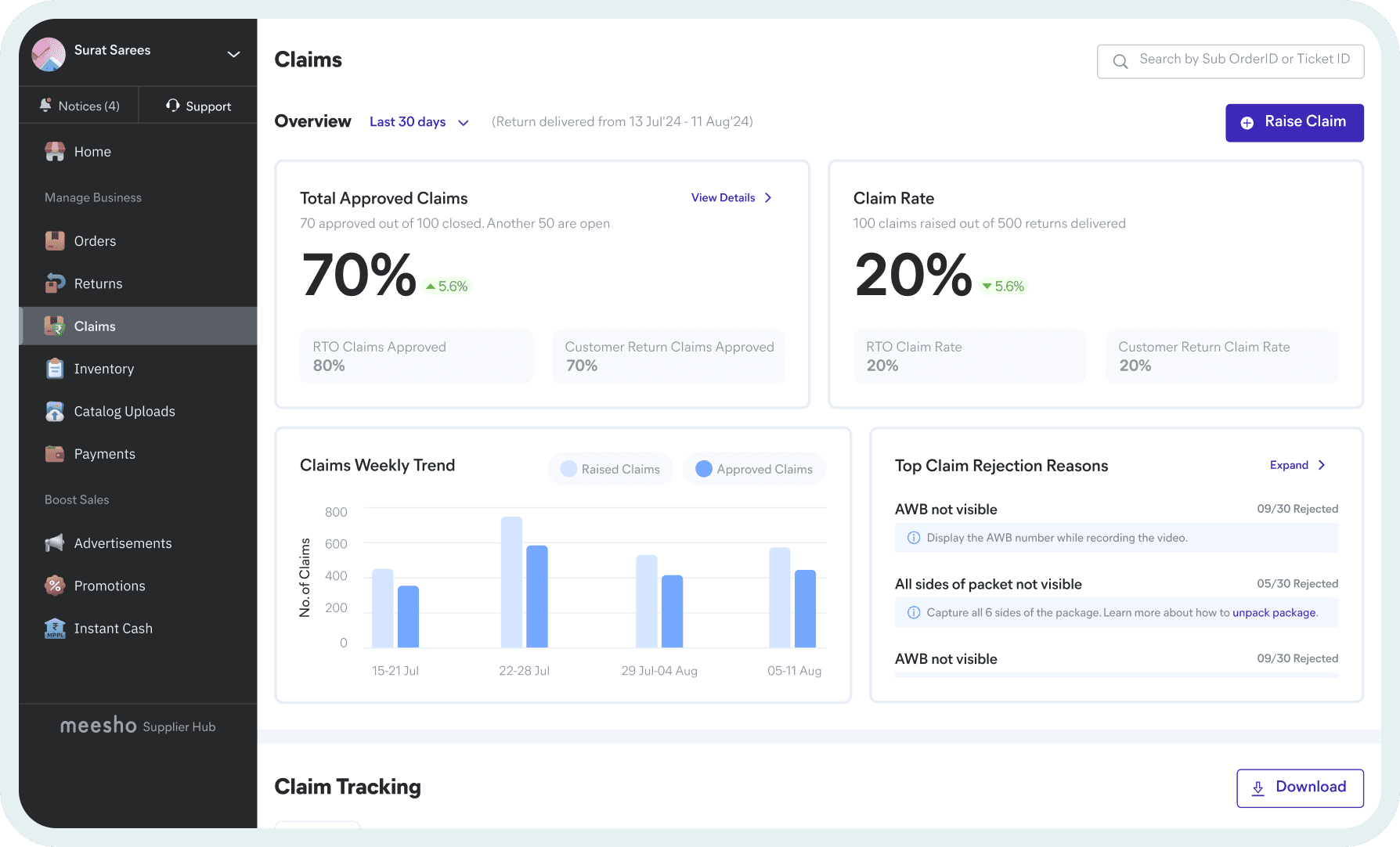
This fragmented journey became our primary focus. We knew that building a single, centralized claims dashboard would not only improve usability but also restore seller trust and keep them on the platform.
The Transparency & Trust Deficit.
Beyond the fragmented journey, sellers like Arun were operating on a foundation of distrust. The dashboard's metrics were confusing, creating a frustrating disconnect between what they saw and what they experienced.
The Problem
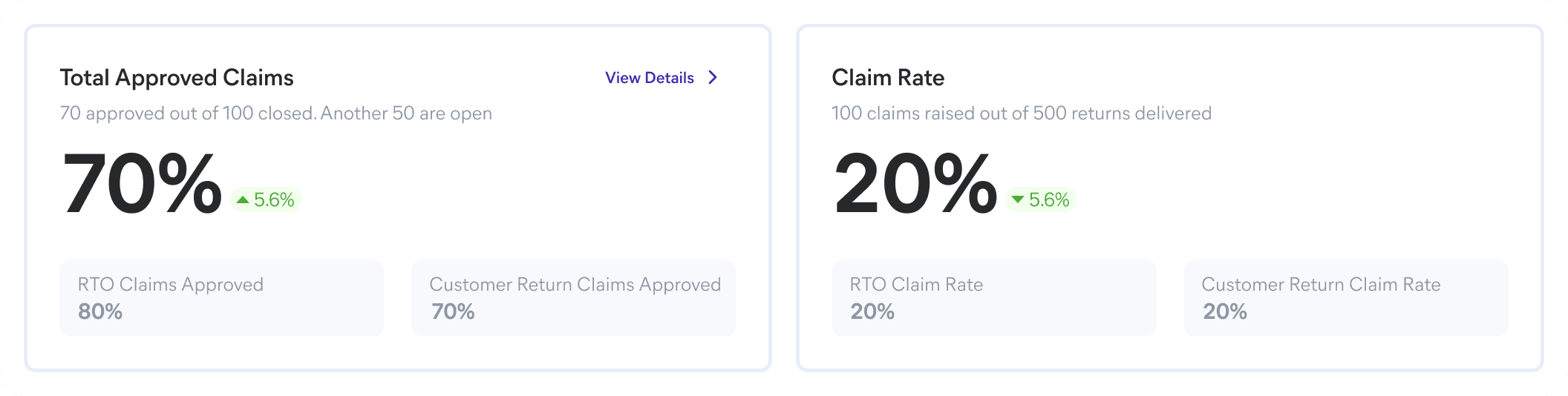
The existing "Total Approved Claims" metric was misleading. In one dashboard, it showed an approval percentage with no underlying breakdown or context, leaving sellers to guess which claims it was even referring to. In another dashboard, it showed all-time claims data, which was irrelevant to a seller's day-to-day business.
The Impact
This lack of transparency eroded trust. When a seller saw a high approval percentage but their own spreadsheets showed a different, more chaotic story of partial payments and pending claims, they questioned the platform's honesty. This data opacity was a core contributor to the "trust deficit" you mentioned earlier.

Problem
Metrics is placed in Return dashboard without context.
There is no L2 level of information telling about 104 claims that are approved.
Returns Tab

Problem
Seller manually calculated their own approval rate—by using these no. on claim tracking sub-tab, 444 approved claims out of 901 raised—they arrived at 44%. This number sharply contradicted the 63.8% shown on the returns dashboard(shown above).
This insight made it clear that we couldn't just create a new dashboard; we had to design a system that was fundamentally transparent. We needed to build an experience that didn't just show numbers but explained how those numbers were calculated, restoring faith in the data and the platform itself.
The Lack of Actionable Feedback.
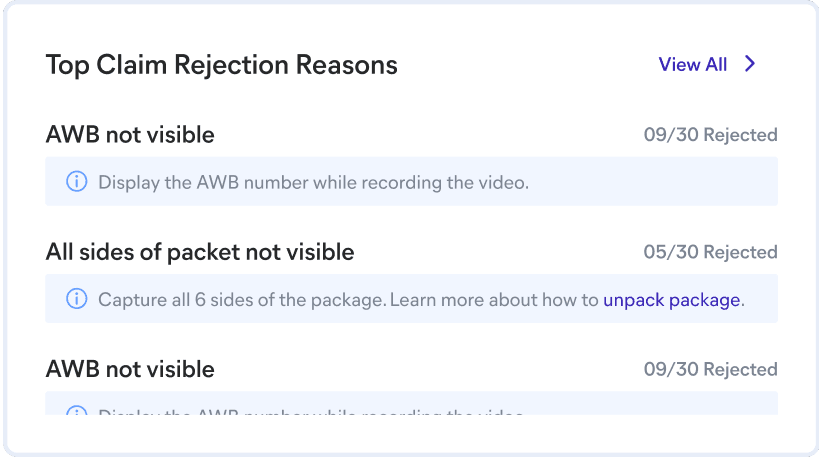
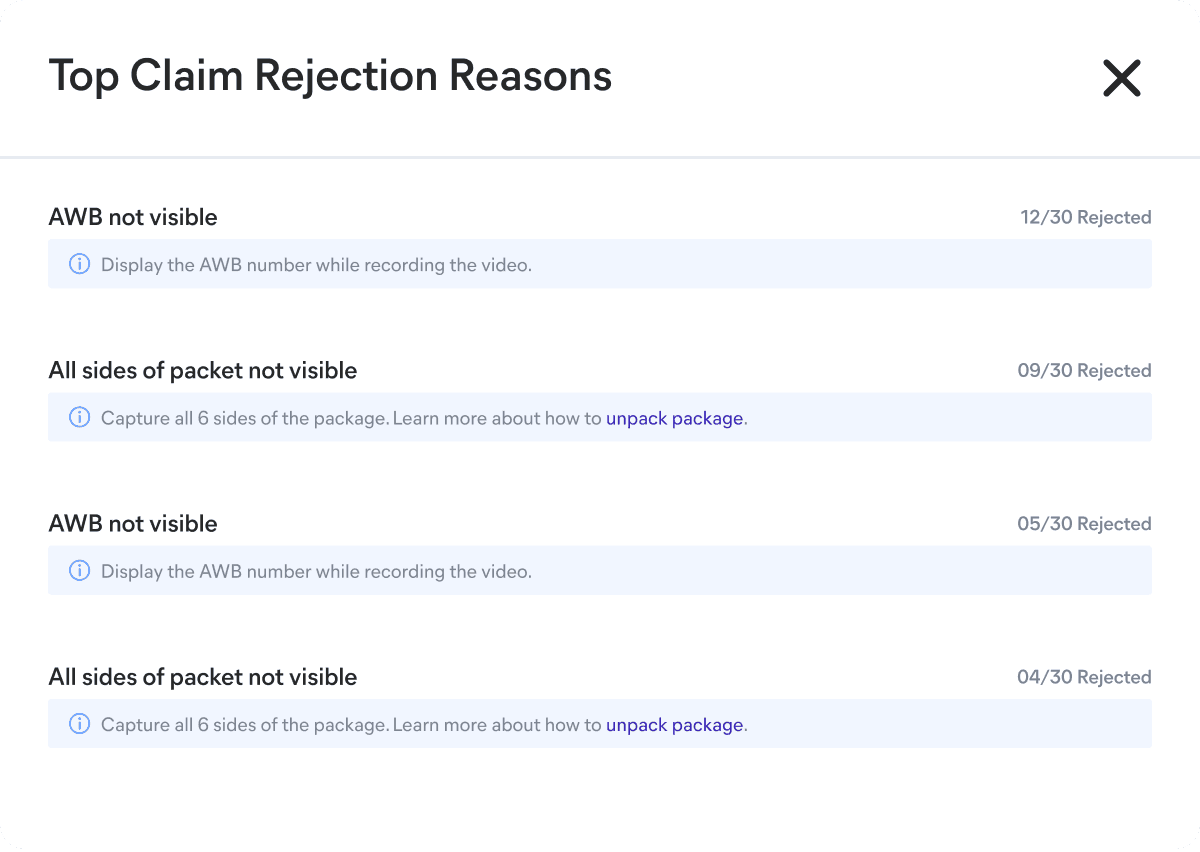
The final and most frustrating pain point was the one that made sellers feel powerless. Even when they managed to raise a claim, the process offered no actionable feedback on why a claim was rejected or if it was missing information.
The Problem
The support tickets that were meant to be a source of information were a dead end. They contained templated responses and no specific reasons for a rejection. Even worse, there were no notifications for when a claim needed "more info" from the seller's side. This meant that claims were being denied not because of a seller's error, but because they simply missed a notification in a sea of other support tickets.
The Impact
This lack of transparency and proactive communication forced sellers to constantly check their tickets, a tedious and time-consuming process. It created a situation where sellers were losing money due to the platform's poor usability, leading to either a loss of revenue or the need to hire additional staff just to manage claims.

Problem
The notification system is redundant in setting priority from most important to least important
This insight showed us that our new dashboard had to do more than just display data. It had to be a tool for empowerment, actively guiding sellers and providing clear, actionable feedback to help them improve their claim success rates.
1
2
3
Understanding sellers like Arun?
Arun:
The scaling merchant 📈
Chaotic Challenges 🧗🏻♂️
Tiresome Claims Raising : A lengthy cumbersome claim raising.
Data Discrepancies: Mismatch in data shown within Meesho panel.
Platform Usability Gap: The entire claim raising and rejection process was scattered between Return and Support Dashboard leading to confusion.
Bio 📋
Age: 35 years
Location: Surat (Manufacturing Hub).
Business: Established Online Seller
Status: High-Volume Seller 500+ orders/day
Seller Accounts: 2+
Listed Catalogs: 1000+
Manages a team of 10+ and uses advanced tools (Wisdom, OMS Guru) for inventory and reconciliation, indicating high technological and business knowledge.

Further Frustrations 🤺
Frequent rejection of genuine claims without proper resolution.
Financial Gridlock: Pending claim payments.
Data Mistrust: Significant mismatch between Meesho panel data and his internal Excel sheets
No notification for important updates related to claims.
Lack of Transparency in displayed data
Bare Minimum 🎯
Better data representation & pinpoint reasons for improvement.
Granularity in data presented & clear messaging on claim rejections.
Easy claim raising process with better transparency and proper resolution mechanisms.
Brings Delight ✨
Notification of important updates for high-volume operations.
Easy download of monthly compilations and access to relevant metrics for complex business tracking.
Platform features that offer visual clarity and control over long processes (e.g., enhanced dashboards).